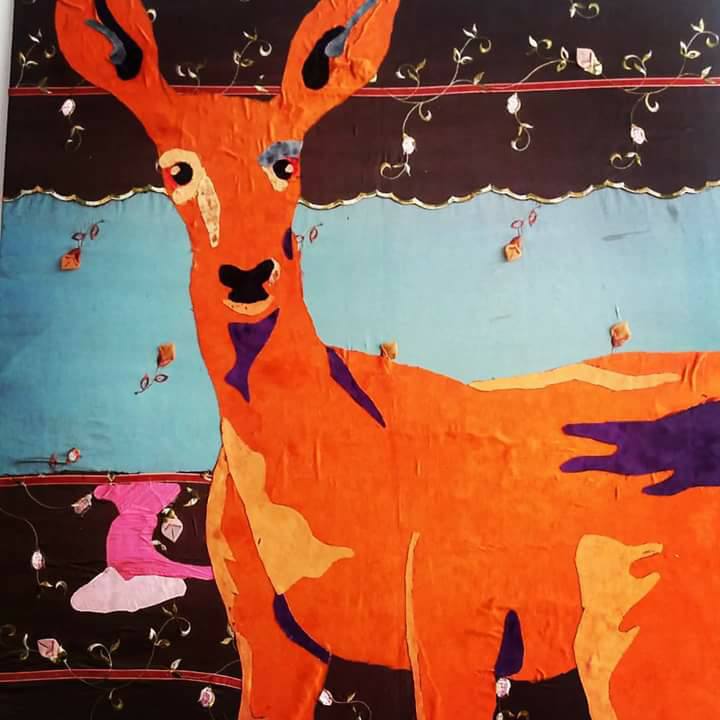
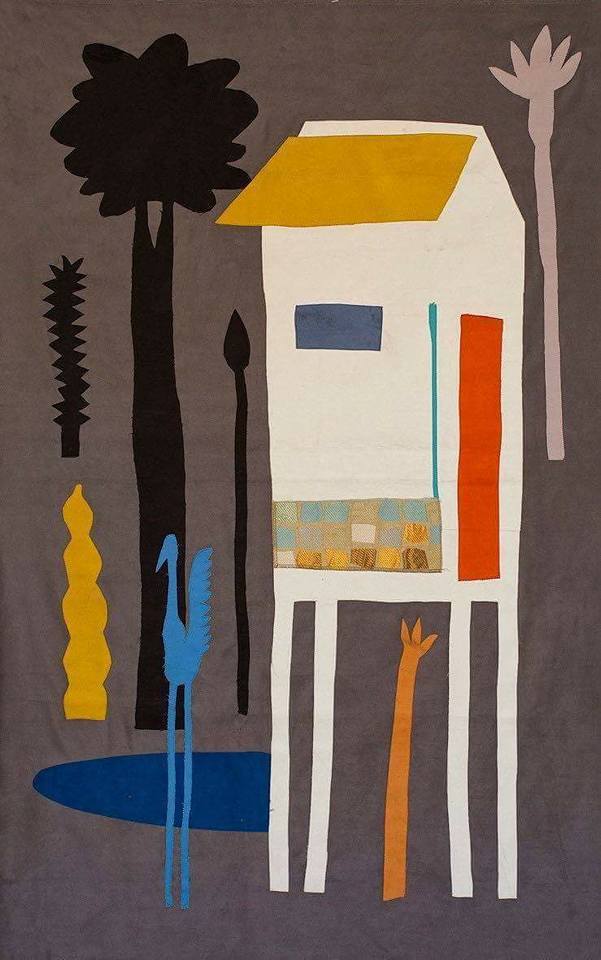
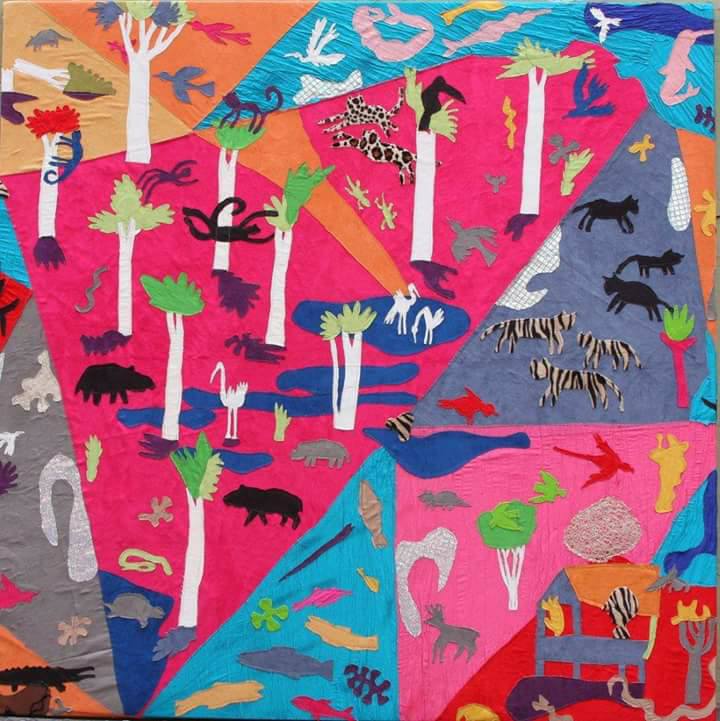
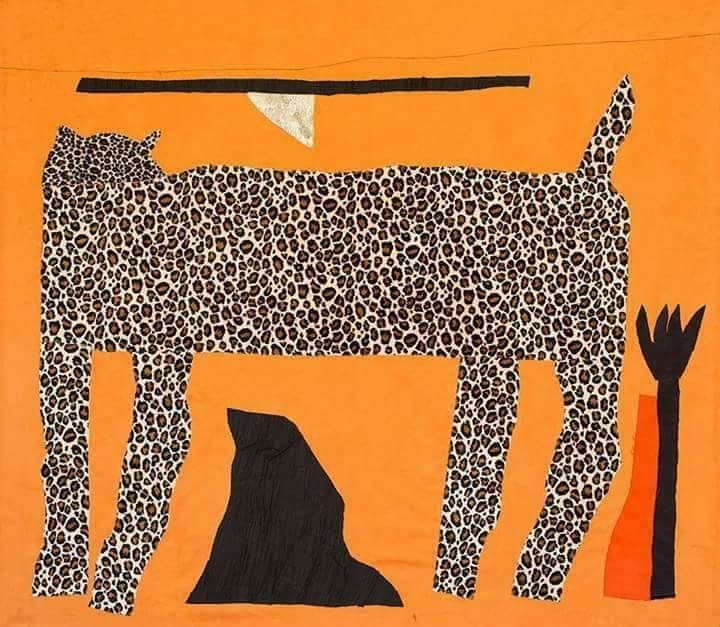
Collage
Geometric Symphony of the Jungle
Photo by the writer: Czar Gutierrez
Czar Gutierrez
December 28, 2024
4 min read
Updated: December 30, 2024
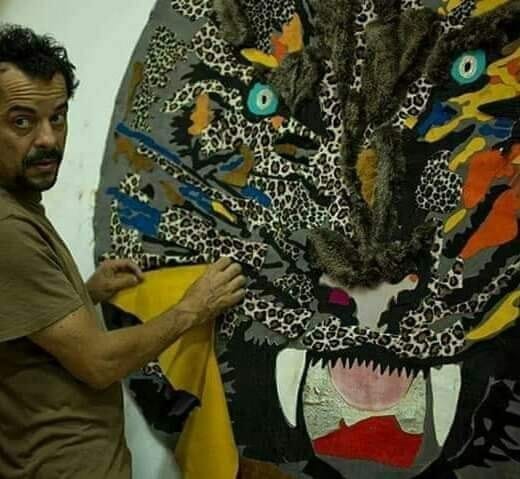
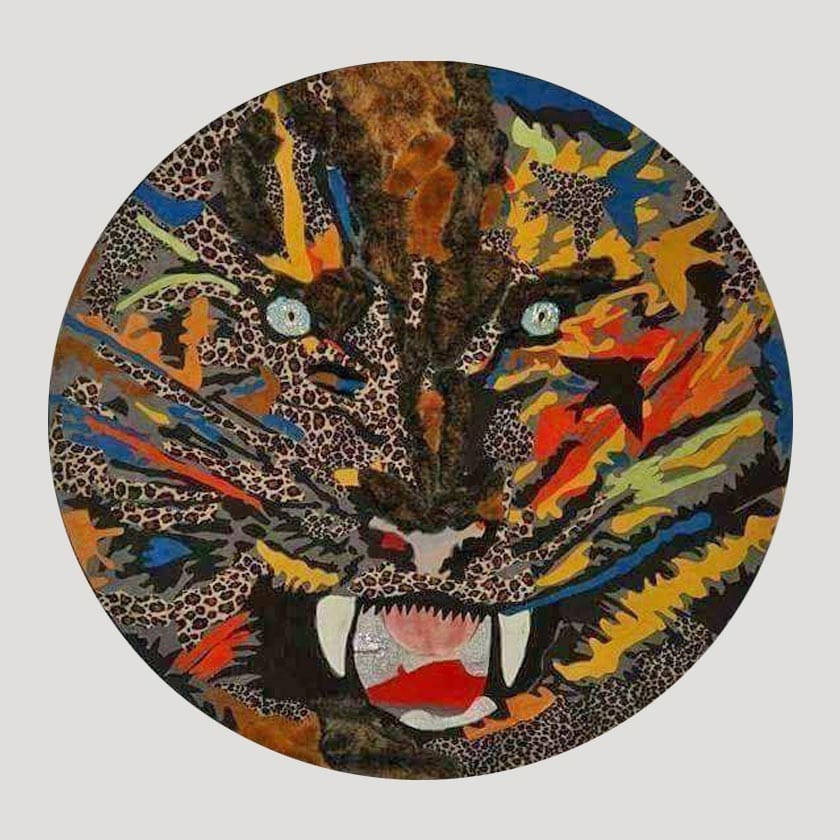
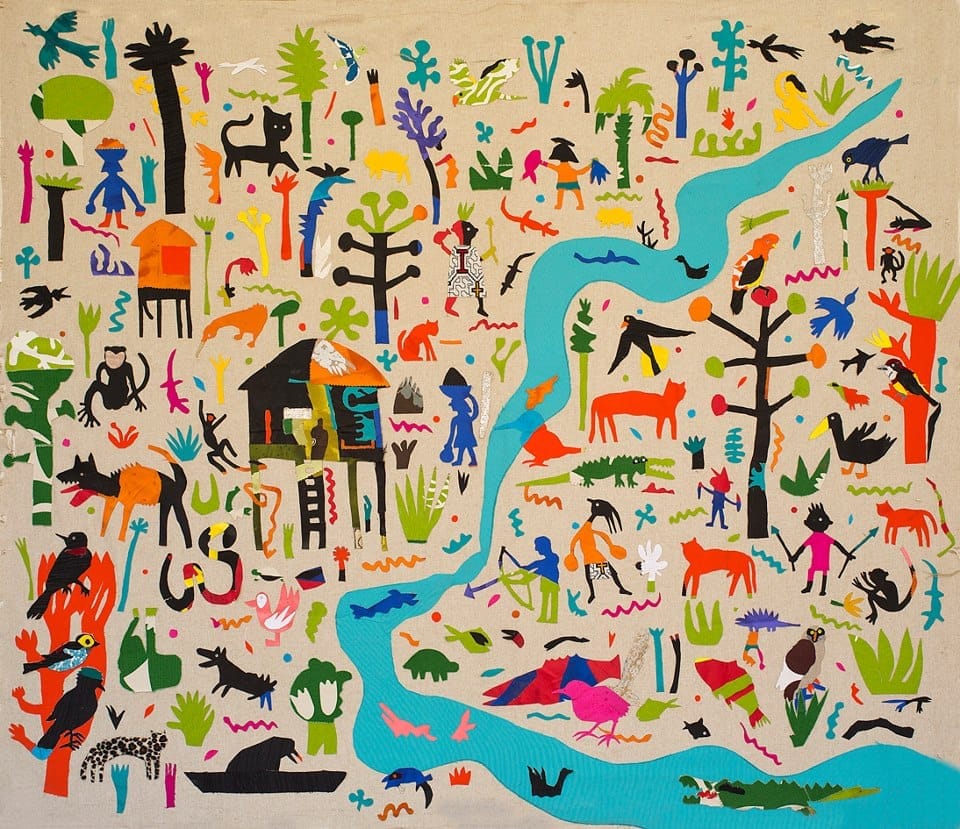
After presenting his work in Milan and touring Europe, Antonio García opens a new exhibition at the Los Heraldos Negros bookstore in Barranco. A reason to take a comprehensive look at his work.
Written by: Czar Gutierrez
1: Juice
He holds an achira leaf in one hand, cut with extreme precision. Drops of sap fall onto the canvas. Upon contact with the air, they take on the intense red of blood shed by ancestral gods. Then he picks up a clay vessel and, with the care of an alchemist, pours in the juice of the cipó de los cuentos, a climbing plant that grows at the foot of the jungle’s most imposing trees. The white, almost translucent juice transforms into a gray that evokes the mist over the jungle in the early morning hours.
He takes some ruda brava leaves, extracts a thick, dark ink, and mixes it with passion fruit sap. Unique tones of shadows and light cover the canvas, as if the jungle itself were breathing within his painting. He doesn’t use brushes but employs shiringa branches—fine, flexible fibers—with which he draws precise lines. These are the same forest fibers weaving through his work. His strokes are gentle yet powerful, like the wind slipping through the leaves of the sangre de grado, whose piercing red becomes a fiery line on the canvas.
It is man confronting the greatest canvas ever imagined: the open jungle sky. His palette contains no manufactured colors; the ancient rituals of Indigenous peoples fuel his brushwork, while sacred plants provide his dyes. Every stroke becomes a communion with the spirits of the forest. His eyes shine with a mix of wonder and reverence. Each plant he touches offers more than color: it gives its essence.
2: Roots
“The first time I went to the jungle was to Oxapampa in 2003. I went to see waterfalls and ended up fascinated by the artists of an Asháninka community who painted on cloth dyed with materials I later discovered during my time living with them in Junín, Pucallpa, and Madre de Dios,” says Antonio García (Lima, 1969), master painter, an irrepressibly talkative man, an enemy of “civilization,” and in perpetual romance with emerald-colored spaces.
“It was in 2007 in Pucallpa that I was absolutely captivated by the craftsmanship of the Shipibo–Conibo, Asháninka, Bora, Harakmbut, and Yine artisans. In every community, I have at least one master and guide.” He then delves into the advantages of painting with Marañón river clay using cane brushes, of working with natural cotton fabrics previously soaked in mahogany juice, and of achieving rich iridescence by applying fruit-based pigments and organic fixatives with rudimentary, eco-friendly techniques. These methods respect a millennia-old, living heritage now at risk of extinction.
From this, García created a series of works using clay